

Warning systems for low gas situations
Alarm systems for ‘low gas’
Divers often start their diving career with frequent checks of the pressure gauge to see if there is sufficient breathing gas. When diving with compressed air, you quickly learn to control your breathing and consume gas efficiently. Rebreathers work on a different principle where gas consumption is generally not an issue. This is mainly because with rebreathers we consume almost exclusively oxygen. We use diluent gas during the descent and dump it again on the ascent. The diluent gas only becomes interesting when the rebreather does not function properly. We then want to take gas with us at all depths that we can breathe there. To know if a diver has sufficient gas, a calculation must be made beforehand in which worst-case scenarios are leading.
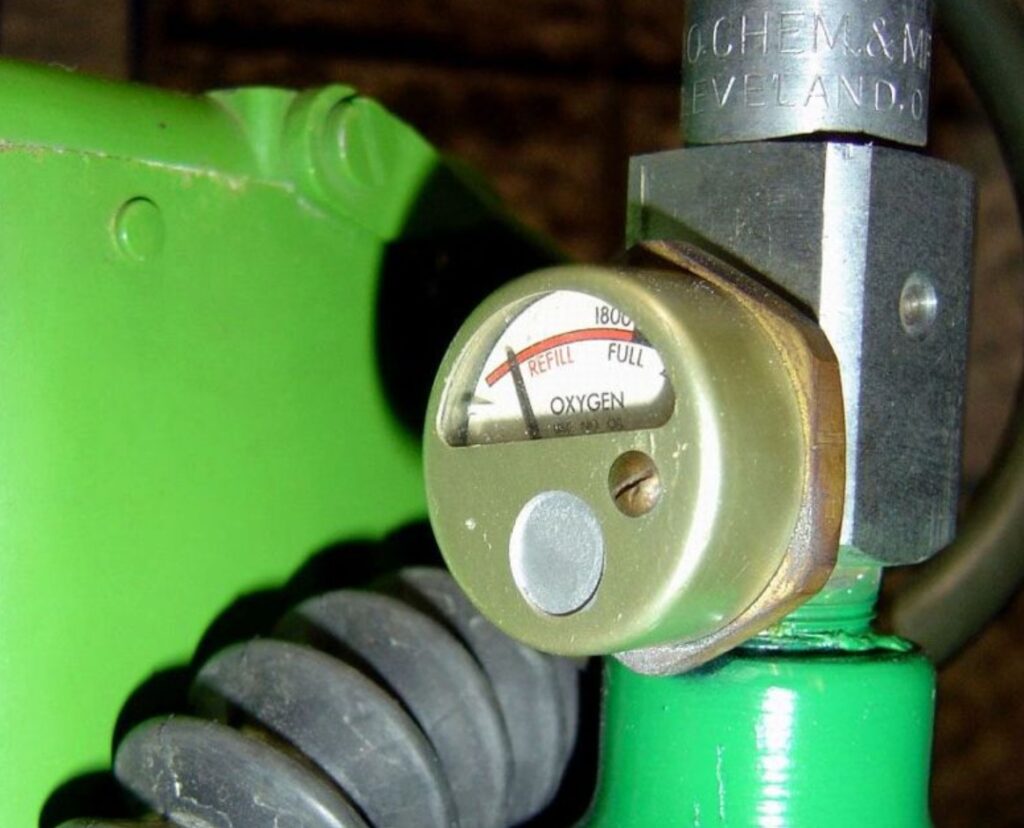
For oxygen divers who dive exclusively with oxygen, the gas supply is also important, despite the fact that a small cylinder quickly suffices. An average swimmer will consume approx. 1 l/min. If you have a 3-liter cylinder with 200 bar, you theoretically have 600 liters of gas, allowing you to stay submerged for hours. Albeit with a limited depth, and the consumption will increase enormously during exertion. A trained diver can consume up to a fourfold amount of gas during heavy swimming labor, for example against the current. It is therefore also of great importance for the oxygen diver to know what his gas supply is.
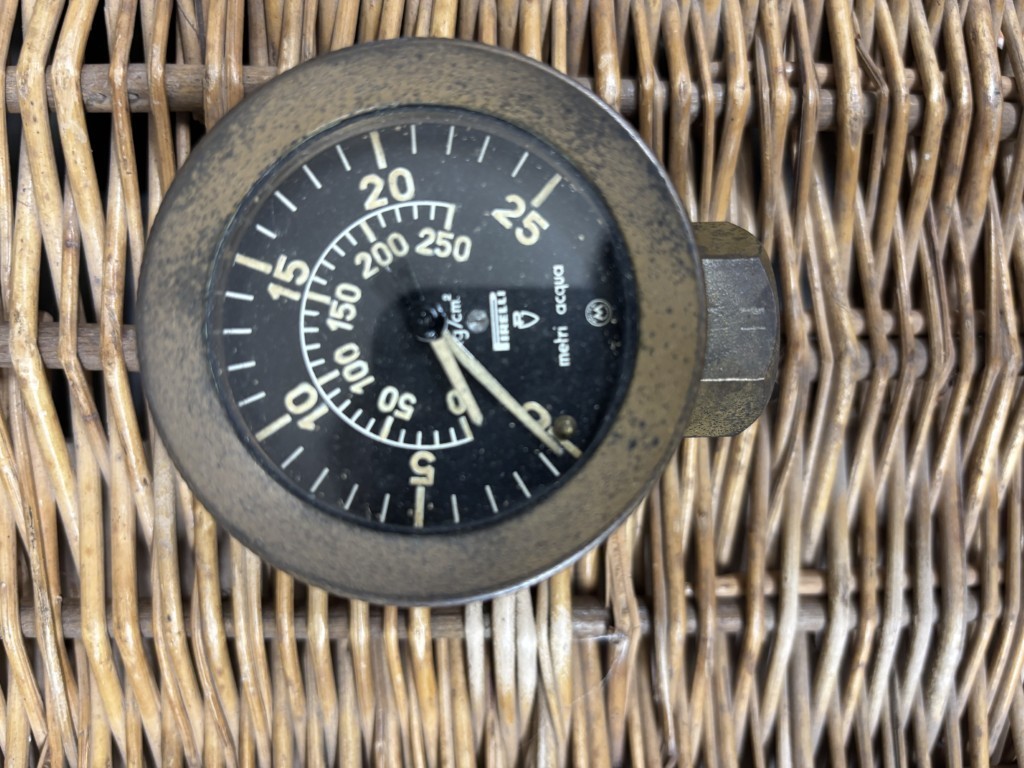
Firefighters and miners working with oxygen systems experience the same problem. At rest, their consumption is minimal until a great exertion must be delivered. Reading a pressure gauge has therefore led to accidents in the past. Now modern systems are equipped with low-gas alarms, often with an intrusive beep or, like in the past, with a simple alarm clock that went off after the duration of use. The MSA shipboard firefighting sets were equipped with a glorified kitchen timer that was set to 50 minutes. The firefighter then still had 10 minutes to find a safe haven.
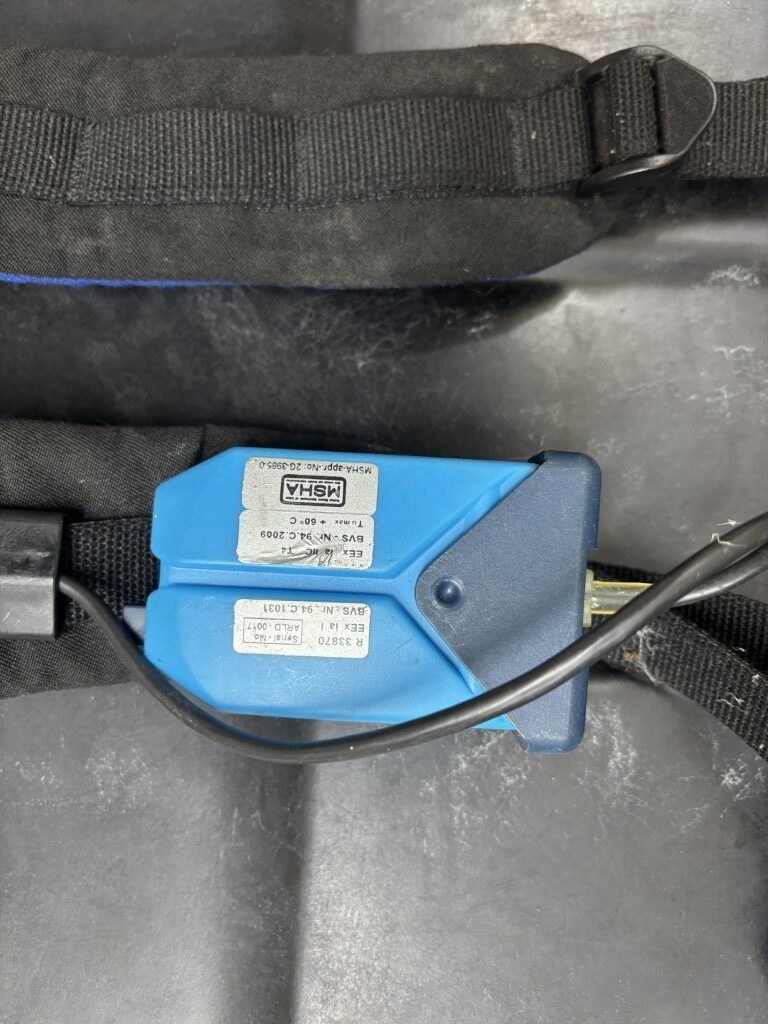
Modern rebreathers for diving applications are nowadays equipped with pressure sensors. This allows not only the gas supply to be monitored, but also predictions regarding the expected possible dive time to be calculated. If the gas composition and ambient pressure are known, decompression calculations in real time can also become possible.

Therebreathersite was founded by Jan Willem Bech in 1999. After a diving career of many years, he decided to start technical diving in 1999. He immediately noticed that at that time there was almost no website that contained the history of closed breathing systems. The start for the website led to a huge collection that offered about 1,300 pages of information until 2019. In 2019, a fresh start was made with the website now freely available online for everyone. Therebreathersite is a source of information for divers, researchers, technicians and students. I hope you enjoy browsing the content!