

Compressed gas:
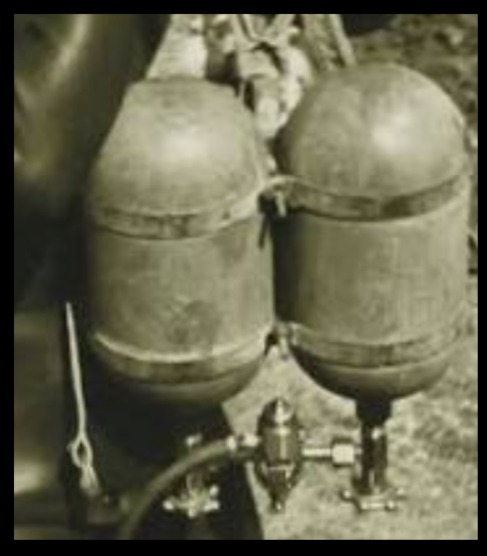
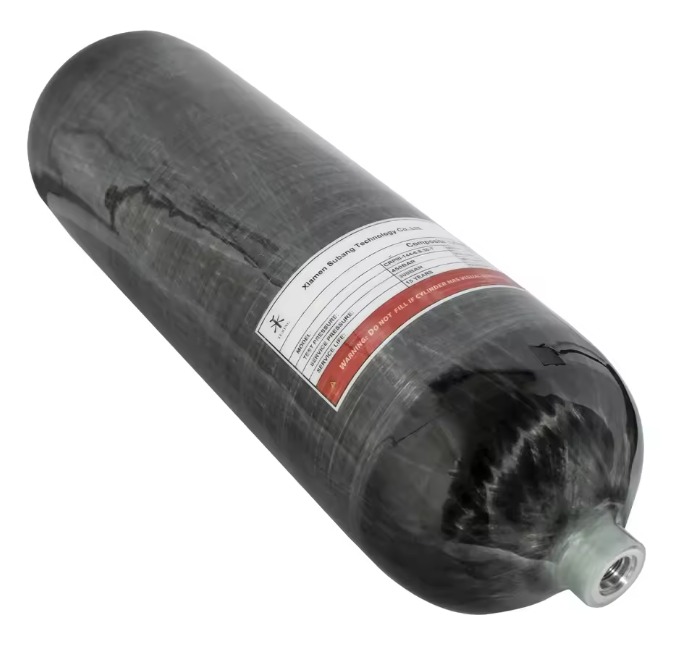
The first divers took gas with them in an animal bladder that they carried with them to breathe out. Also, the gas present in a diving bell was breathed to provide the body with the necessary oxygen. A next phase arrived when gas under pressure was taken along whereby in the early years the pressure could only be increased by a few atmospheres. Until the 1940s, a pressure up to approx. 150 bar was the standard, after which compressors were built that reached 200 bar for breathing gas. Today, the use of 300 bar cylinders is no longer an exception. In the offshore industry, even cylinders made of composite are used that apply a pressure up to 350 bar.

Liquid gas:
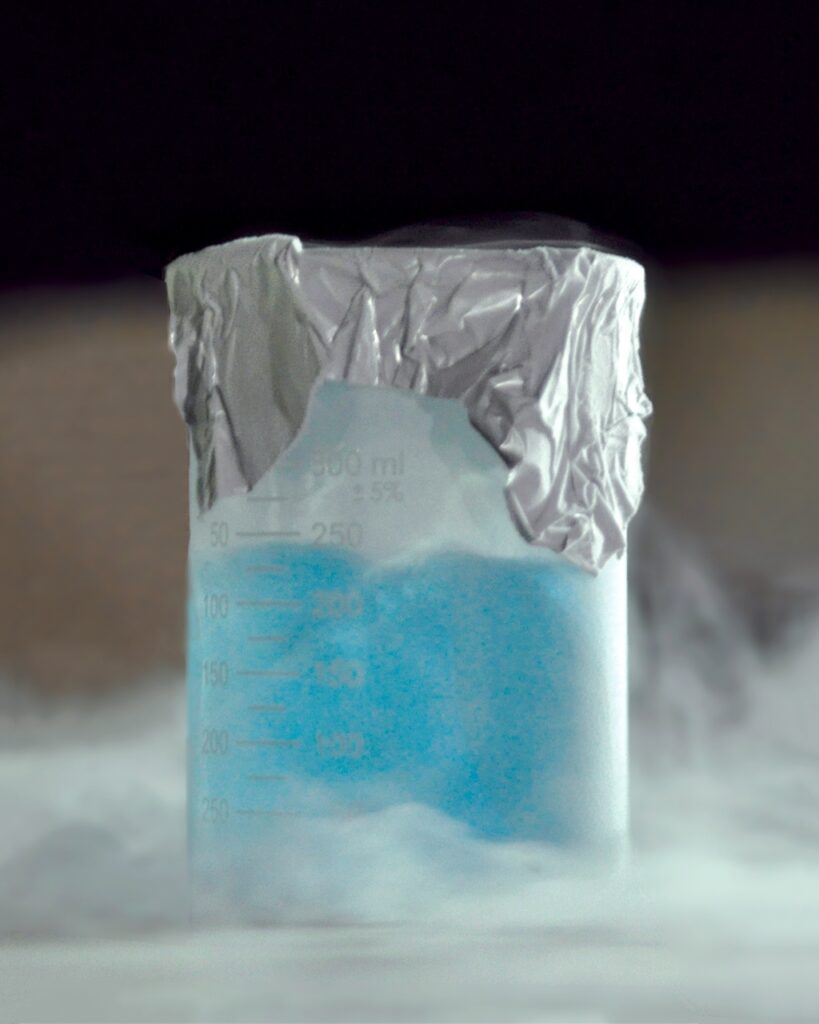
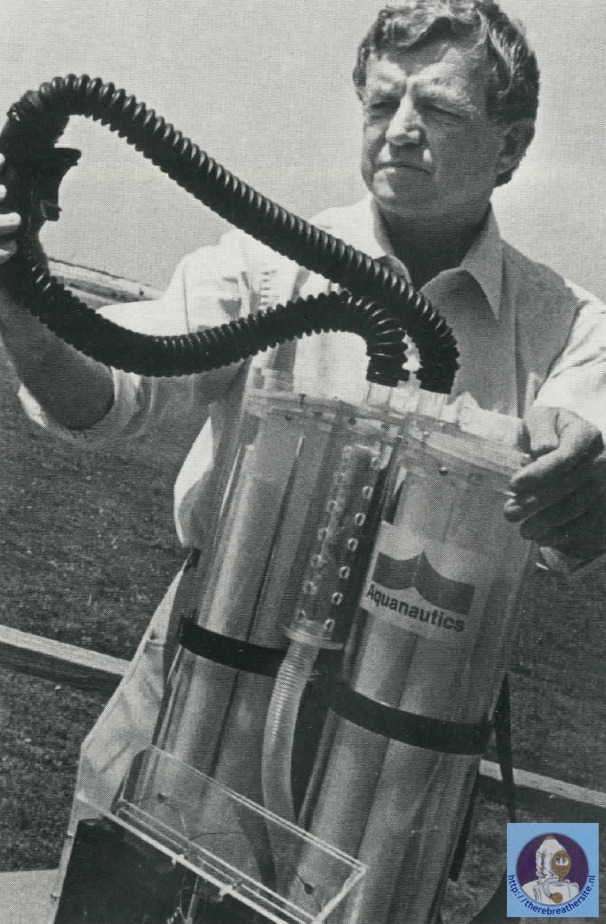
For a long time, another way to obtain breathing gas was sought. For instance, rebreathers have been built that contain liquid air and after evaporation every litre of liquid air contains 725 liters of gas, whereby a 3-liter thus contains 2175 liters of gas, while a 3-liter with 200 bar contains only 600 liters; the gas can then therefore be used 2175/600 = 3.6 times longer. Liquid air must of course remain very cool (approx. -195 degrees C), which is no easy task for an underwater system. Experiments are also being conducted with liquid oxygen combined with a gaseous diluent. This allows for even more economical diving because a human consumes between 1 and 4 liters of oxygen during a dive. A 3-liter liquid oxygen can produce 2580 liters of oxygen gas. This allows for significantly longer diving than with gaseous oxygen, whereby however the scrubber will form the limiting factor.
SSD:
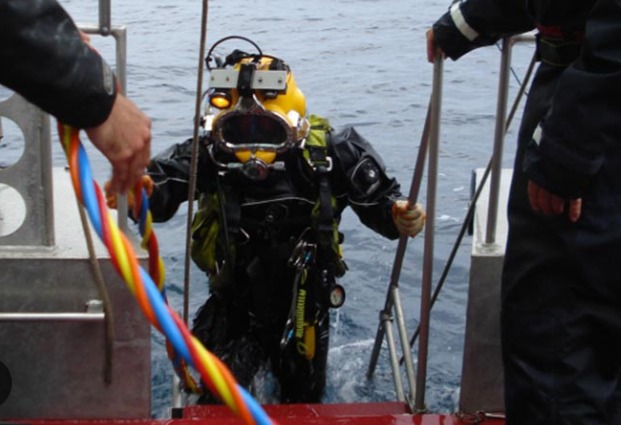
A completely different approach (and still widely used) is to supply the diver with gas from the surface. This allows the mixture to be adjusted and offered accurately and virtually without limits. SSD (surface supplied diving) is still applied on a large scale in the commercial and military diving industry.
Hookah:
We also know the Hookah system where a small compressor supplies air to a diver who breathes directly from this provision at shallow depth (mostly 10-20m). Widely used for ship inspections and for recreational diving.
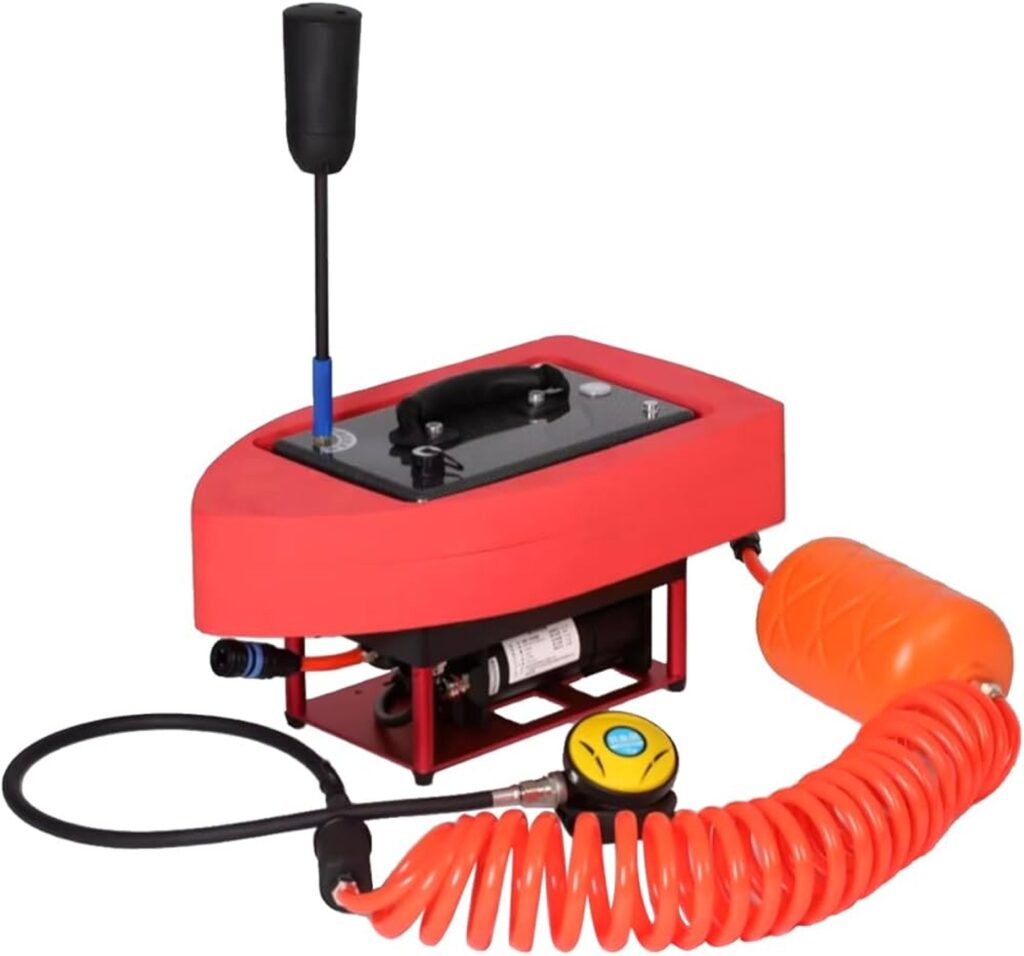
UW-emergency filling:
For rebreather divers, emergency filling systems exist that make it possible to refill the rebreather (onboard) cylinders underwater. This system makes extremely long dive times possible, where the scrubber time is again the most important limiting factor. For that reason, double scrubbers are also used, or scrubbers with Lithium hydroxide are used whereby 2 to 4 times longer times can be achieved. Lithium hydroxide is however difficult to obtain, expensive, and reacts violently with exposure to water.
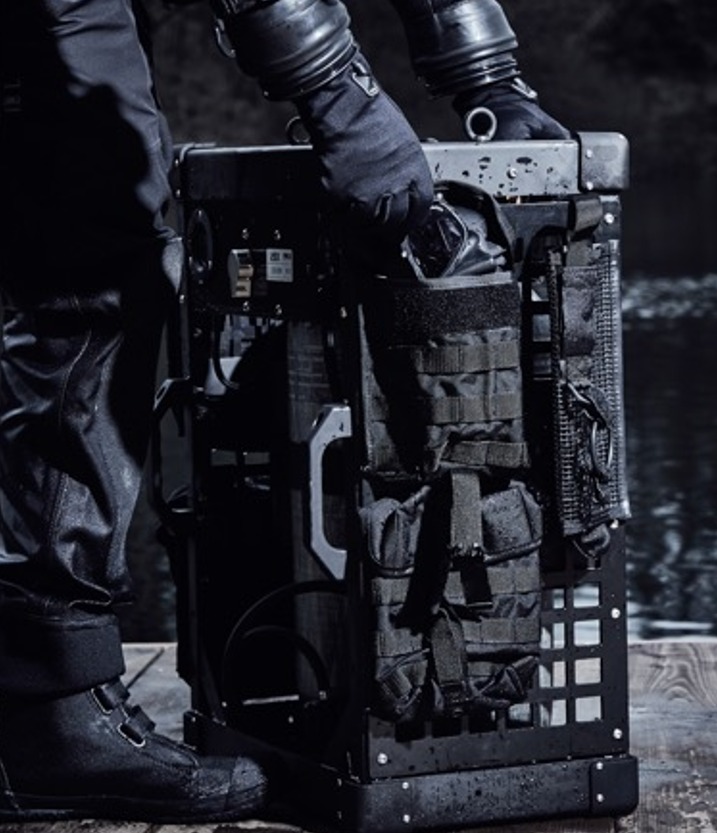
Chemical:
In the mining industry and for the fire department, systems have been developed in which oxygen is produced in a chemical way. These systems are in use up to this day but can only produce oxygen that can be breathed at atmospheric conditions.
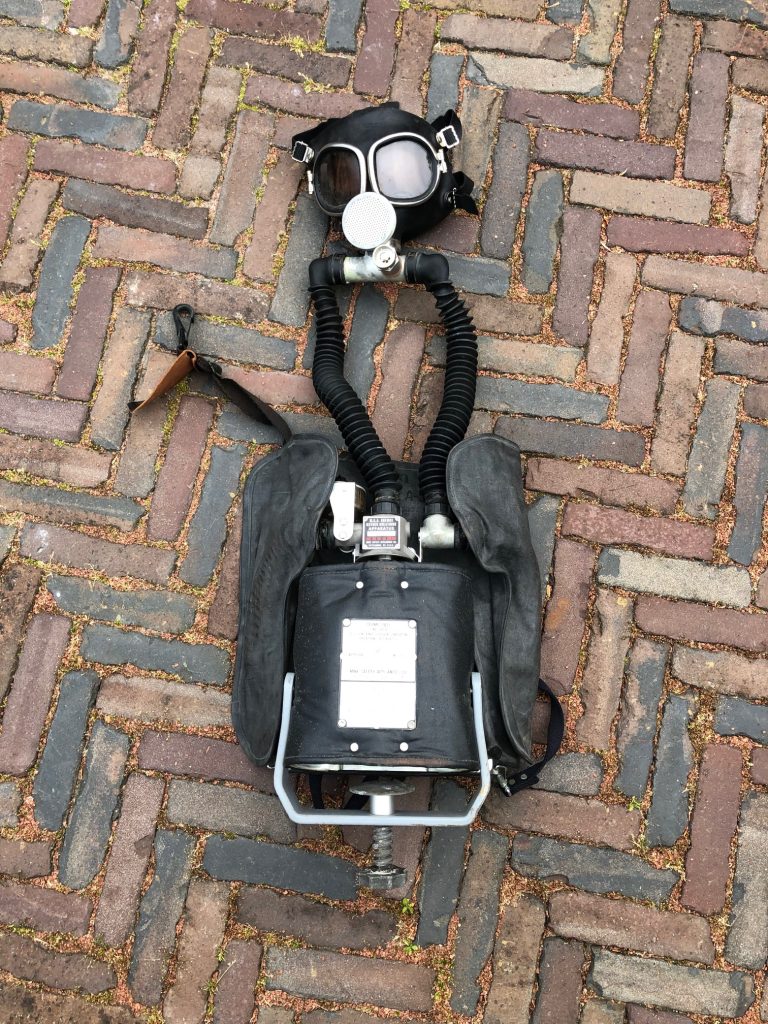
Hydrogen:
Perhaps the most fascinating development. For very deep dives (>300 m), systems have been tested with:
- Hydrox = hydrogen + oxygen
- Hydreliox = hydrogen + helium + oxygen
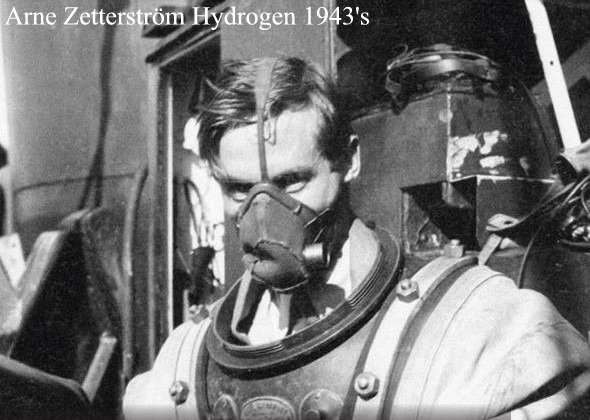
COMEX and the American navy experimented with this for depths of 500–700 meters. Hydrogen significantly lowers the gas density and reduces the problems of HPNS (High Pressure Nervous Syndrome). Due to the explosive character of H2, general use will still be a long time coming.
The first Helium dives were made by Arne Zetterström from Sweden in 1943. Unfortunately Arne died during a dive in 1945.
Oxygen from regenerative chemistry:
Systems have been investigated where: CO₂ is removed, oxygen is chemically recovered. Applied in space travel life support. For mobile divers, the installation mostly turned out to be too heavy and too complex.
Artificial gills:
The greatest challenge is the low oxygen concentration of water:
- Seawater typically contains only 6–8 mg of dissolved oxygen per liter.
- A resting human needs approximately 250 ml of oxygen per minute.
- Therefore, an artificial gill would have to process enormous amounts of water to extract sufficient oxygen.
Known projects:
- Hemosponge (Duke University) – experimental oxygen extraction from water.
- Amphibio by Jun Kamei – a biomimetic design inspired by insect gills; remained conceptual. Is more of an art form than a serious attempt at breathing in water.
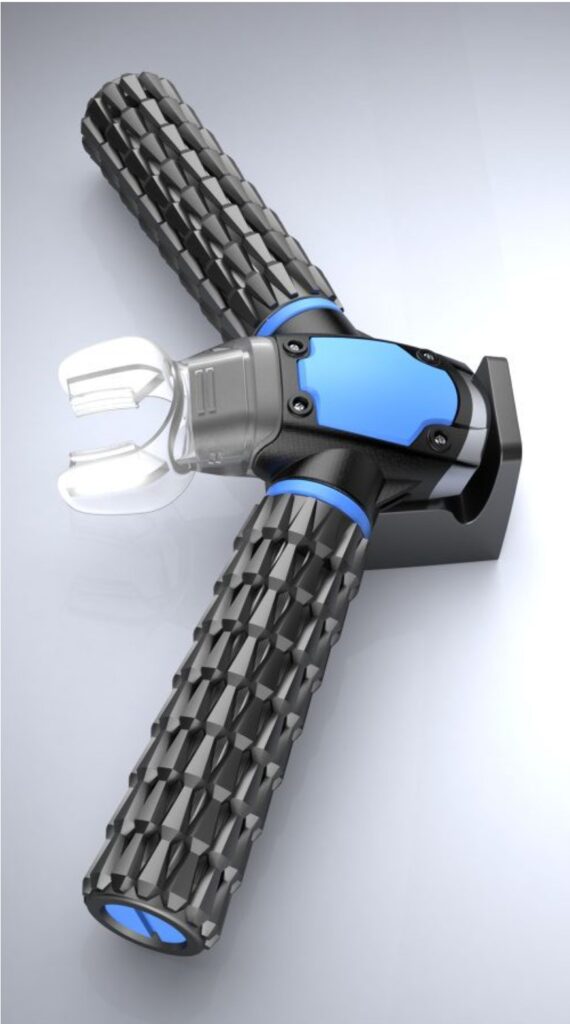
- Triton – a crowdfunding project that claimed to work as an artificial gill, but turned out not to be a working system. (The ‘Artificial Gills’ that became a hot topic through crowdfunding, now under suspicion of fraud) – Here again an example of something that completely cannot work. Yet there were also many people here who held it to be realistic.
- Artificial gills are experimental systems that must extract dissolved oxygen from water to let humans breathe underwater for long periods without compressed air cylinders. Although the concept has existed for decades and is inspired by the highly efficient gills of fish, there currently exists no practical system that can meet the oxygen demand of a human.
- Since the 1960s, various prototypes have been developed based on membranes, chemical oxygen carriers, and electrochemical techniques. These systems could extract oxygen from water to a limited extent, but turned out to be too large, too heavy, or insufficiently efficient for human use. An important problem is that water contains only a very small amount of dissolved oxygen, as a result of which enormous amounts of water must be processed to deliver sufficient breathing gas.
- In addition to the technical challenge of oxygen extraction, the removal of carbon dioxide also forms a major obstacle. Furthermore, problems such as energy consumption, biofouling, corrosion, nitrogen absorption, decompression risks, and the physiological burden on the human body play an important role. Because of this, artificial gills are currently not suitable for practical diving.
- The most recent developments focus on advanced membranes, biomimetic designs, synthetic biology, and systems making use of new energy sources. Some technologies are already being applied in underwater robots and research vehicles, but applications for humans are still in the research phase.
- The conclusion is that artificial gills are a technically impressive and potentially revolutionary concept, but that fundamental physical and biological limitations ensure that a usable system for human divers is for the time being not yet within reach.

Therebreathersite was founded by Jan Willem Bech in 1999. After a diving career of many years, he decided to start technical diving in 1999. He immediately noticed that at that time there was almost no website that contained the history of closed breathing systems. The start for the website led to a huge collection that offered about 1,300 pages of information until 2019. In 2019, a fresh start was made with the website now freely available online for everyone. Therebreathersite is a source of information for divers, researchers, technicians and students. I hope you enjoy browsing the content!