

Why rebreathers have OPV’s
Introduction:
A pressure relief valve (PRV) is a component that we divers have been familiar with for some time. It is found on buoyancy compensators, dry suits and older first stages. You may also be familiar with it from your compressor. It is essentially a safety device that protects against excessive pressure. On the compressor, it prevents in the event the pressure sensor from shutting down the motor disfunctions, the pressure vessel will not be overfilled to a level that rupture of the vessel occurs; on the buoyancy compensator, it prevents you from uncontrolled ascending when you forget to blow air out through your inflator. In a rebreather, but it can play a much more delicate role. In a semi-closed rebreather, it allows excess gas to escape from the breathing circuit. In a closed system, it prevents our lungs from experiencing excessive pressure or an uncontrolled ascent. Ultimately, a pressure relief valve is an essential part of our equipment. It deserves attention and must be well maintained. Limescale can cause ageing, and ageing can lead to a torn membrane.

The Overpressure Valve (OPV), also known as the pressure relief valve or dump valve, is a crucial safety and functional component in the loop of a rebreather. Although the basic operation is the same, the role of the OPV differs significantly between a closed circuit (CCR) and a semi-closed circuit (SCR).
- General Operation and Purpose
An OPV on a counterlung acts as a safety device that automatically releases gas as soon as the pressure in the loop exceeds the ambient pressure by a preset value. This prevents the counterlungs from bursting or the diver from experiencing physical discomfort due to excessively high pressure during exhalation. - The OPV with the Semi-Closed Rebreather (SCR)
In a Semi-Closed Rebreather (SCR), the OPV is not a passive safety feature, but an active part of the gas cycle:
- Constant Gas Flow: An SCR continuously feeds a fresh amount of gas (often Nitrox) into the loop via an injection nozzle.
- Volume Management: Because constantly more gas (including nitrogen especially) is added than the diver consumes, the volume in the counterlungs rapidly increases.
- Automatic Ventilation: The OPV is adjusted so that with each breathing cycle, the excess gas (and thus part of the built-up CO2 and nitrogen) is vented to the environment. This creates the characteristic small streams of bubbles in an SCR.
- The OPV with the Closed Rebreather (CCR)
In a Closed-Circuit Rebreather (CCR), the OPV is primarily intended for pressure compensation during ascent:
- Expansion: During ascent, the gas in the loop expands due to the decreasing ambient pressure. Without a correctly working OPV, the diver would have to vent gas through the nose to prevent damage to the lungs or the unit.
- Manual vs. Automatic: Many CCR divers adjust their OPV so that it just doesn’t leak during normal breathing, but vents gas immediately at a minimum overpressure during ascent or when manually adding extra gas (e.g., during a ‘diluent flush’).
- Maintenance and Safety
- Contamination: Because the OPV is in direct contact with the moist exhaled air, bacteria and limescale can affect its operation. Thorough rinsing with disinfectant is essential.
- Adjustment: A too tightly adjusted valve makes exhalation difficult and increases the risk of lung overpressure injury; a too loosely adjusted valve leads to unnecessary gas loss and affects buoyancy control.
- Optimal operation of an OPV is essential because a leaking OPV can lead to catastrophic situations where trim is lost and the diver no longer breathes a correct mixture (especially with SCR systems).
The opening pressure of an Overpressure Valve (OPV) on a rebreather is very sensitive. Because the diver has to move the gas with their own lung power, we are talking about very low pressure differences compared to the ambient pressure.
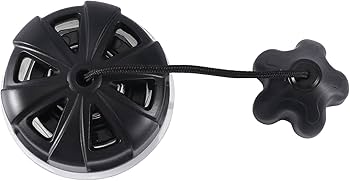
Typical Pressure Values (Cracking-pressure / Venting)
In most rebreather systems the OPV is adjustable, but the standard “cracking pressure” (the pressure at which the valve begins to open) is typically in the following range:
- Standard setting: Between 10 mbar and 40 mbar above ambient pressure.
- Minimal resistance: In some systems, this can be reduced to approximately 5 mbar, but this increases the chance of unintentional gas loss with movements in the water.
- Maximum resistance: When tightened tightly, the pressure can rise above 50-60 mbar, which will be experienced by the diver as heavy breathing resistance (Work of Breathing).
Context of these values
To put these figures into perspective within diving physiology:
| Pressure (mbar) | Comparison with water column | Diver experience |
| 10 mbar | ~10 cm water pressure | Very smooth, opens almost effortlessly upon exhalation. |
| 30 mbar | ~30 cm water pressure | Noticeable resistance; common for SCR to maintain volume. |
| >50 mbar | >50 cm water pressure | Tiring; risk of hypercapnia (CO2 buildup) due to heavy breathing. |
Difference in adjustment per type
- SCR (Semi-closed): A slightly higher pressure (approx. 20-30 mbar) is often chosen here. This is necessary to keep the counterlung sufficiently inflated (“full”) before the excess gas is dumped, which helps with a constant gas mix.
Page 3
- CCR (Closed): Divers often set the OPV here as lightly as possible (approx. 10-15 mbar) for ascent. The goal is that the expanding gas escapes without the diver having to actively exhale through the nose or mouth.
Importance of “Hydrostatic Pressure”
The position of the OPV relative to the center of the diver’s lungs determines the effective pressure. If a diver lies horizontally, the pressure difference between the lungs and the counterlung is minimal. When the diver hangs vertically, however, a hydrostatic pressure difference arises. An OPV set at 20 mbar can then spontaneously start venting simply due to the water pressure pressing on the counterlung.
Note: A too high setting (>40 mbar) significantly increases the Work of Breathing. This can lead to accelerated CO2 buildup, which underwater is one of the biggest dangers in rebreather diving.
Finding the “sweet spot” for your OPV is a dynamic process that depends on your trim, the position of the counterlungs and the phase of the dive. An optimally adjusted valve minimizes the Work of Breathing (WOB) without wasting gas.
- The “Bubble-check” method (Basic setting)
Some divers start their dive with a completely closed valve during the descent to avoid losing valuable gas. Once at depth and lying horizontally, adjust the balance as follows:
- Step A: Turn the valve fully open until you notice gas escaping with each exhalation.
- Step B: Turn the valve shut millimeter by millimeter (usually clockwise) until the leaking stops with normal, relaxed breathing.
- The result: The valve is now at the minimal cracking-pressure. As soon as you exhale slightly deeper than normal, or if the volume in the loop increases, the system dumps immediately.
- Balance based on Trim and Hydrostatic pressure
The position of the counterlungs (back-mounted vs. over-the-shoulder) determines where the “air bubble” is in your device:
- With Over-the-Shoulder (OTS) lungs: The OPV is often at the lowest point of the lung when lying horizontally. If the valve is too loose, the hydrostatic pressure of the water can squeeze the lungs empty.
- The Test: Lie in a good horizontal trim. Inhale maximally. The counterlungs should not “flutter” or vent gas. If this happens, turn the valve one click tighter.
- Adjustment during Ascent (The “Ascent Mode”)
This is the most critical moment for balance. During the ascent, the gas in the loop expands. - Too tight: You feel an unpleasant pressure on your jaws and lungs; you have to vent gas through your nose
Page 4
- Optimal: Turn the OPV a quarter to half turn looser as soon as you initiate the ascent. This allows the valve to act as an autopilot that absorbs the expansion, so you can concentrate on your computer and depth stops.
- Specific balance for SCR vs. CCR
With CCR: You strive for a completely closed system during the bottom phase. The OPV is purely a safety valve here. The balance is ideal if the valve just doesn’t vent when you do a “diluent flush” (flushing your loop with fresh gas).
With SCR: You are looking for a balance where the valve vents a small amount of gas at the end of each exhalation. If the valve is too tight, the lungs become too full and exhalation resistance increases exponentially.
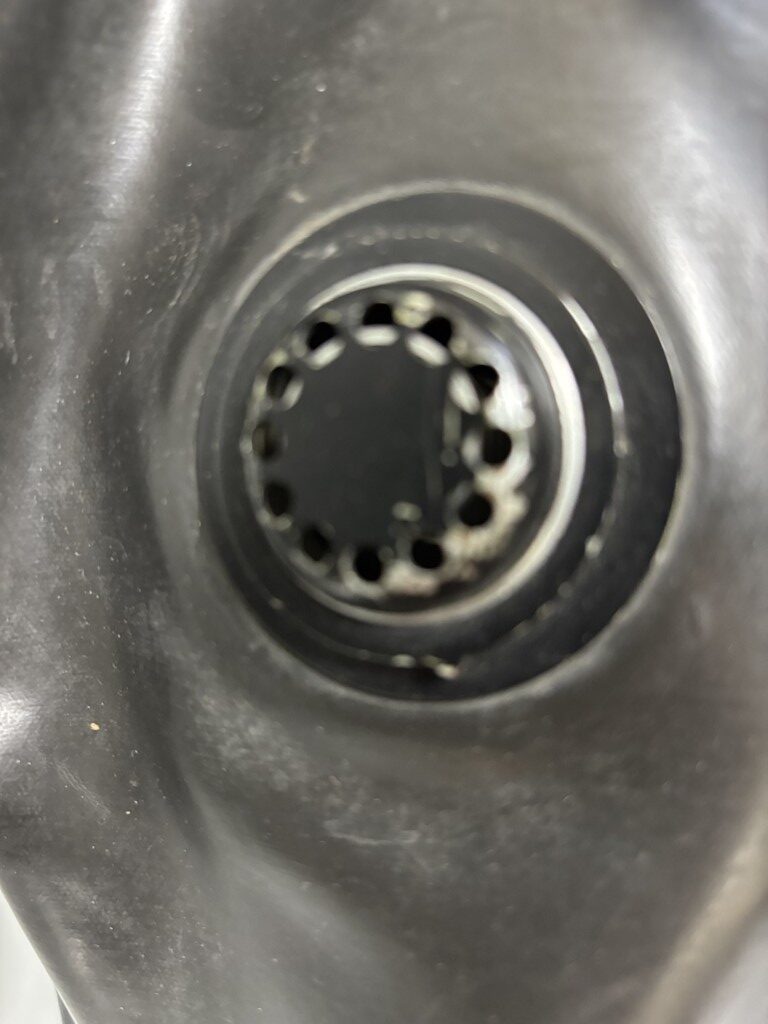
There are situations where the diver does not want to be bothered by bottles or rebreathers on the back. They then often opt for a side mount configuration with open circuit or side mount rebreather.
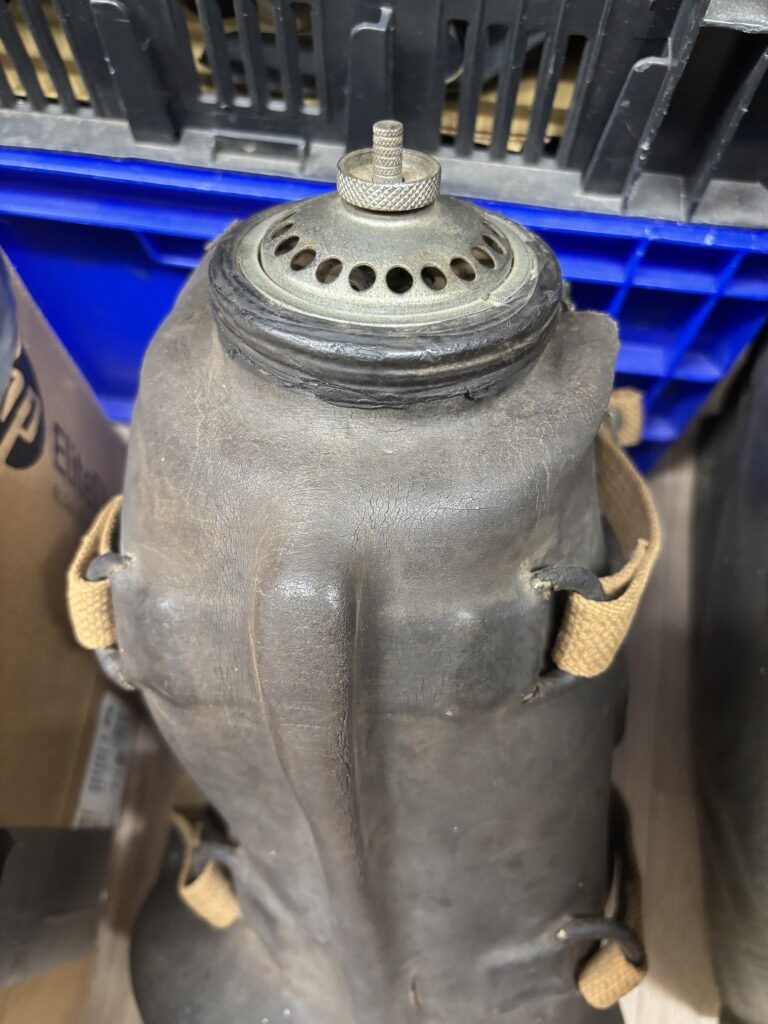
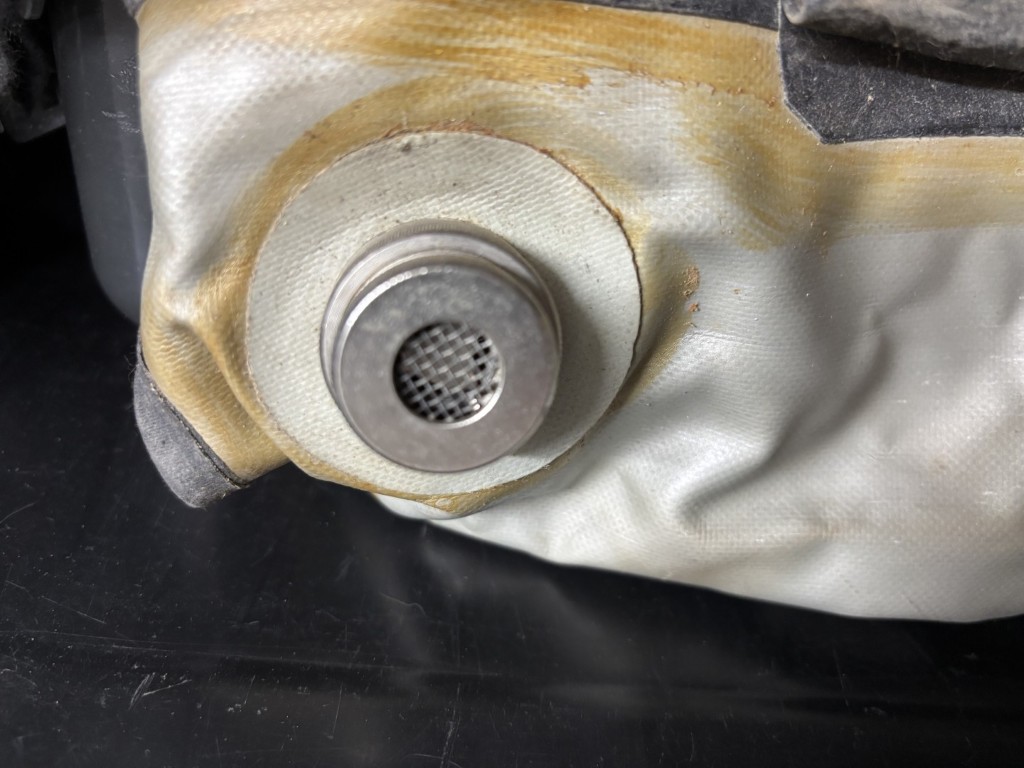


Therebreathersite was founded by Jan Willem Bech in 1999. After a diving career of many years, he decided to start technical diving in 1999. He immediately noticed that at that time there was almost no website that contained the history of closed breathing systems. The start for the website led to a huge collection that offered about 1,300 pages of information until 2019. In 2019, a fresh start was made with the website now freely available online for everyone. Therebreathersite is a source of information for divers, researchers, technicians and students. I hope you enjoy browsing the content!
Leave a Reply